
CHANEL — Afternoon Rêverie
As our communities are locked in and we are stripped of some exciting encounters of our regular life, we start to dream more intensely, creating those missed experiences in our most vulnerable state. An important way to access a world beyond our reach during times like these has always been film and television.
In partnership with CHANEL, we caught up with three of the brightest talents on Germanyʼs acting horizon — Maria Dragus, Milena Tscharntke and Lisa Vicari. We dive deeply into the world of their dreams, how acting affects their emotions and what genuinely makes them happy. We peek at a new world around the corner where virtual reality becomes more and more prevalent, the parallels to voice acting and why Maria cries on airplanes.
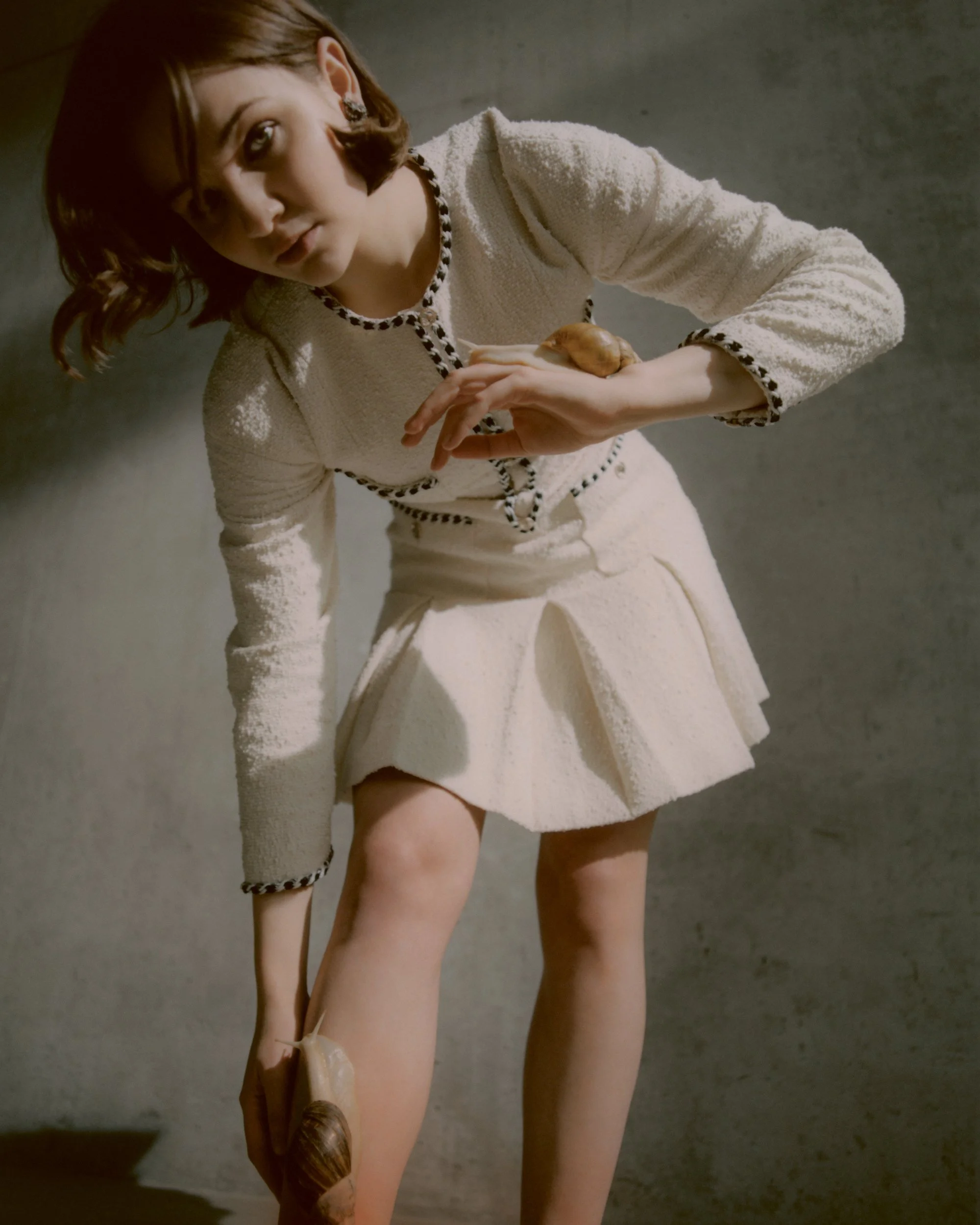
Stefan Dotter: What’s the etymology of the name “Vicari”?
Lisa Vicari: Originally, the name is Italian. My grandfather did extensive research about it because he had no idea where it came from. Apparently it’s from Lago Maggiore — unfortunately though, I do not speak Italian.
SD: What do you want people to feel when they see you acting?
LV: That depends on the scene or the film — I want the observer to relate to the role empathetically and to feel and live through the scene as strongly as possible. Ideally, as a viewer you forget that all of this elaborate construction is happening behind the scenes at that moment.
SD: As an actress you learn how to provoke certain emotions, do you think that makes actors and actresses more emotionally-controlled or liberated?
LV: I think everyone is different in that sense, because we all create these emotions in a different way and they come from a different place. There are people who really live through it and there are those who create it in a very technical way. I don’t think it makes us more emotionally-controlled but rather more aware in regards to our emotions. I think we just get more sensitive and permeable. I guess we lose the anxiety of expressing emotions.
SD: How often do you cry when watching movies?
LV: Less than I would like to. I think it is a beautiful thing to cry in the cinema. When you casually watch Netflix at home it is way harder because you are more distracted. I love when a movie touches me so much that it makes me want to cry. I don’t fight it. It hasn’t happened in a while however. Surprisingly enough, I cry a lot when watching Pixar and Disney films.
SD: Did you watch any movies by Hayao Miyazaki? They are very emotional...
LV: Next time I want to cry.
SD: What do you dream about?
LV: Lately I dream very intense, but I don’t remember my dreams.
SD: Are you a daydreamer or a nightdreamer?
LV: Actually both. I dream a lot during the day. I need time for myself to work through some things. When I worked a lot and encountered a lot of people, then I needed a phase where I could work those times retrospectively. In those phases, I dream a lot during the day. I think that’s a very beautiful thing and we let it happen way too rarely because we are always in close range of our phone. We always feel like we need to do something, but we could just sit and do nothing. I dream a lot at night also, I love to sleep...
SD: Especially in this current moment, dreaming is very important. I notice that many people don’t dare to dream anymore because everything feels so hard. I am a big dreamer and am really into how people create their own universes, just out of their head. Thatʼs why I find what’s happening in game design fascinating with works like Death Stranding by Hideo Kojima where Mads Mikkelsen, Léa Seydoux and some other actors were 3D scanned and actually acted in this world. Do you have an interest in this? It might get more relevant in the future...
LV: I never tried it and I can’t really say how it feels. It is growing, but the access is scarce. You need those glasses and it already makes the usability limited. But it will eliminate some limitations so the future in that will be very interesting. I once syncronized a voice for a video game and saw how good those animations have gotten, how real the emotions were when translated.
SD: How was voice acting — doesn’t it feel like something is missing when you do it?
LV: I have a lot of respect for voice actors, it’s a very high form of art. It is completely different and very hard.
SD: What moves you besides acting?
LV: Usually that would be relationships between people, encounters, conversations, experiences — but those are rather limited currently. I think that’s why we look for it in Netflix and social media. Right now I spend a lot of time on my phone, and yes I could use my time in a better way, but that is the place where you see a lot of people now. I have the short rush of a feeling of social interaction. I miss that right now and it feels good to have it. I like reading books, but I don’t see people there.
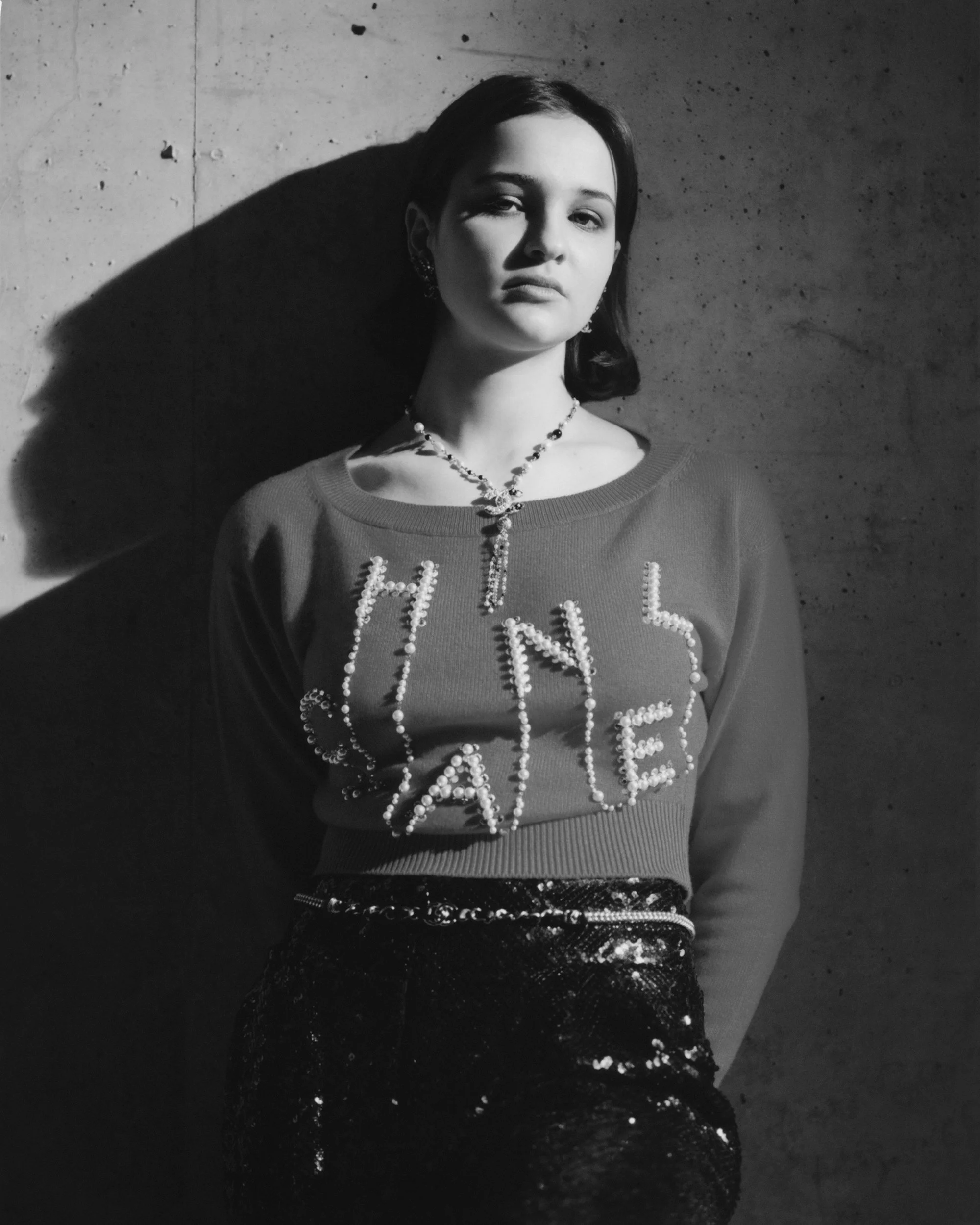
SD: Isn’t that exactly what drives us in the creative community. What draws us is interpersonal relationships. To learn from others and how to interact with them. When I photographed you and I was wearing my mask, then there is already a wall between us. Even these encounters are so controlled in themselves that they don’t really feel like a social experience anymore.
LV: Yes because we can’t hug or drink a beer together. It is all very controlled. I shot a movie in November/December and it felt so good to be among people. It is crazy how fast we adapt to something new, but then we still miss the old life. I’m curious to see how fast it will go when everything is normal again. How fast we will forget what we lived through.
SD: What makes you happy?
LV: Good food and having the people who I love around me. When the sun shines. Sometimes I am also happy without a reason. It can be rainy outside, I am happy. Learning new things, small or significant. I always wanted to play piano or another instrument. I kept avoiding it but in the second lockdown I just sat down and started learning a song — the satisfaction of accomplishing something so simple and pure is something that I felt last when I was a kid. Or learning languages, I’d love to speak Italian and French. What makes you happy Stefan?
SD: It always makes me happy when I can teach others something — or spread experiences and wisdom. The beautiful things you learnt in life, being able to share them makes me the happiest. When teaching my students in Afghanistan I really knew it was something I want to do a lot in my life. I get rushes of happiness without specific reason, it’s an inner state and when I walk the street I manage to draw people in and have very intense random encounters.
LV: Can we get back once more to the topic of dreams? I do think I actually dream more during the day. Sometimes when I have a goal, for example a casting for a part I really want to have, then I dream about it during the day a lot, go through different scenarios of what can happen and how it would feel if it worked out, or not. I even have this when I want to buy a new sofa, I dream about sitting there and having tea. Of course this is also manifesting expectations and sometimes you are disappointed when things don’t happen as you imagined them. Especially before falling asleep, that’s for me the most creative time. It’s when I get all my ideas.
SD: And you still can sleep after?
LV: Not always.
SD: We usually confront our fears in daydreams, we imagine bad things that can happen. Are you very emotional in your daydreams?
LV: Pretty emotional I would say, usually they are positive daydreams, I’m excited and happy. But sometimes it goes in a different direction as well. Sometimes I am afraid of certain things. I think daydreams are a certain preparation for things that can happen — it makes us more anxious before certain things than we need to be.
SD: I think it’s very interesting that we keep living through these patterns of anxiety even though they aren’t confirmed?
LV: Last year I directed and co-produced a music video. It was the first time I was in charge and was carrying a lot of responsibility. We made a campfire and I was afraid that the whole forest in Brandenburg will burn down because of me.
SD: It’s always about the perspectives that we perceive for ourselves. When I work in other parts of the world shattered by war and poverty, I subconsciously re-evaluate the problems I have. For the three months after one of these assignments I am not stressed at all. What’s the worst that can happen? Someone doesn’t like it. No one dies. The worst that happens, is not very bad in relation.
LV: I see it the same way, we let minor things get blown out of proportion because in that moment it feels like the biggest problem. But it doesn’t mean the problem is really big. To get spiritual, you can always break this with a focus on gratitude. You can’t feel grateful and stressed at the same time. It really helps to navigate through this whirlwind.
SD: Gratitude is a killer. Do you follow any spiritual practices?
LV: I did try meditation, I never followed through. There is an app that I usually use. It feels good to be able to tap into it, to know that it is there, in case I need it. I guess it would be better if I would practice regularly.
SD: It’s hard sometimes to combine reality with our spiritual callings. Thanks for the wonderful talk Lisa. It was good to talk about what’s going on inside of you and what moves you, rather than rush through your biography.
LV: Indeed. Very deep. Does that still fit the photos with snails?
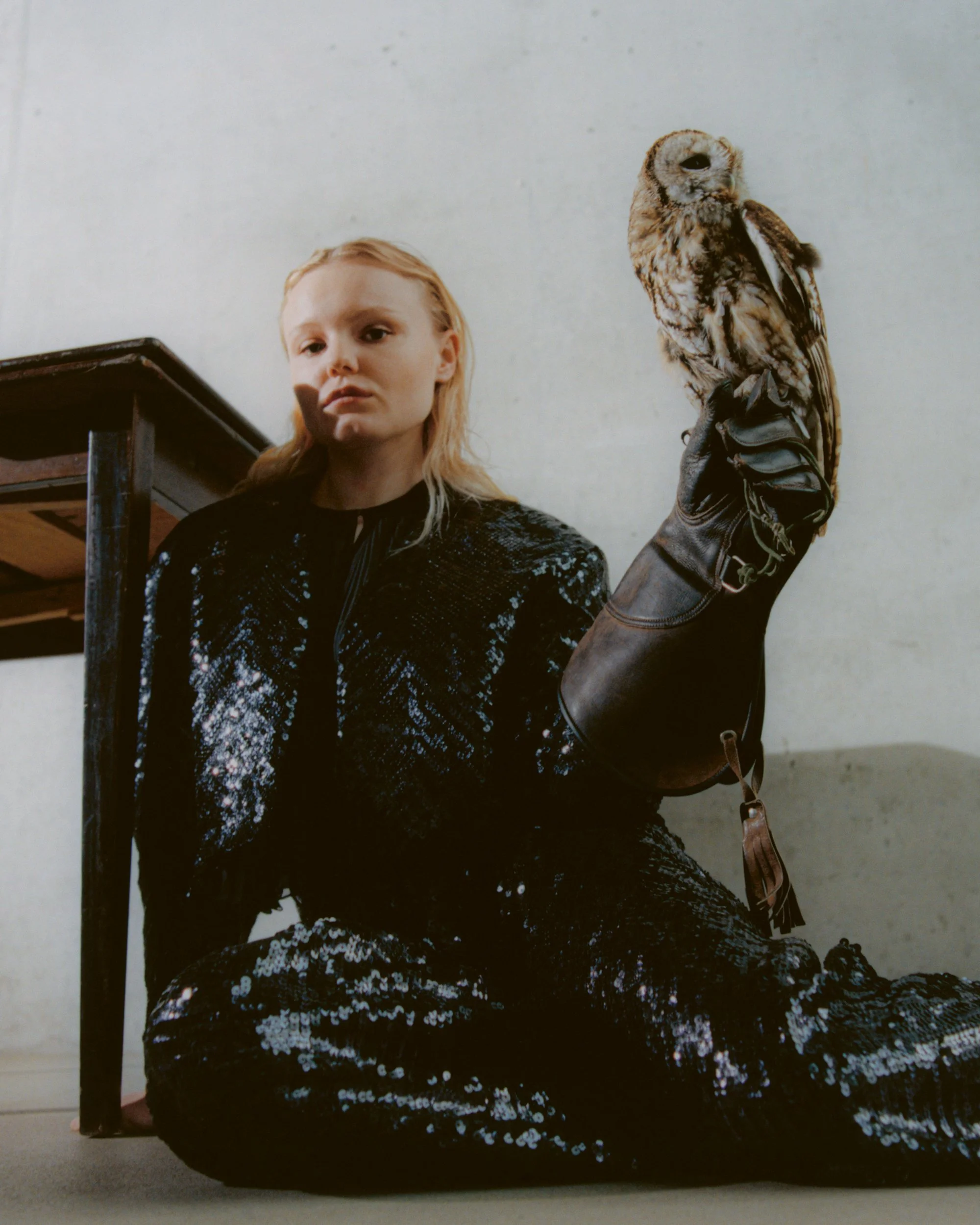
Stefan Dotter: Maria, did your approach on acting change if you are to compare yourself now to your humble beginnings?
Maria Dragus: Of course, totally — it’s something entirely different to act as a child or an adult — now, I have more technique but have held on to a very childlike sense of excitement. Last week when I was on set with you, it was very early and sitting down for hair and make-up I was so incredibly excited. The make-up artist asked me how long I had been doing this kind of work and if it was my first shoot. And I was like “I’ve done this since I was 16 but I’m always as excited as if it was the first time.” It’s so beautiful when you have so much gratitude for those things and the possibility to... [tears in her eyes] ...oh god I’m getting really emotional — it’s just so beautiful. I mean it’s just really, really amazing that I’ve been able to do this for such a long time already and meet and collaborate with new people who are just so wonderful. I think that is what sort-of became clear in the course of time. The connection and exchange with other artists has gotten so strong and I know that this is what I want to do with my life.
SD: That’s a very emotional intro to an interview. It makes me happy because that’s what I want to talk with you about. Actresses learn how to bring specific emotions to the surface, do you think that makes them more sensitive or more emotionally-controlled?
MD: I think of course it’s very subjective and I can only talk about my case. It has a lot to do with protecting yourself. It’s different when I am vulnerable on set for a specific project in comparison to walking through a big city with thousands of people around, I can’t be emotionally unprotected there. I think that’s the art at the end of the day, to be aware of these moments and consciously decide when I want to make myself vulnerable. Also, I am sitting in my home now, you are sitting in yours. We can communicate in a more direct and almost intimate way with each other — right now it is quite easy to get in touch with my emotions.
SD: Are you a daydreamer or nightdreamer?
MD: Both, intensely. I’ve also been practicing meditation for seven years.
SD: How did you get to meditation?
MD: My dad was always very spiritual, my family is Greek-Orthodox, because we are from Romania. You grow up with prayer and the things that your grandma talks about. But religion and spirituality are not necessarily the same and at some point I thought it would be nice for me to have a ritual, a moment to myself. Then I started slowly through Headspace — first 5 minutes, then 10, then it got more. It was very essential at the time because I was playing a big lead and the pressure was really strong. Meditation became a ritual that makes me get back to myself. And for two years I’ve been doing Kundalini and it’s gotten way more intense. I’m very grateful that I have found this way. Breath is an amazing gateway to your body and in your work-life it’s a great asset. You can flow in and out of things quite easily. Back to your question, I love dreams! I think they are important and very beautiful.
SD: What are your dreams about?
MD: A wide range of very different things. I dream about starting a womens collective. I dream about materialising things that seem impossible. I dream very surreal things.
SD: I think that our photographs with the owl will fit perfectly into your dreamscapes.
MD: Definitely, I always love dreams with wings.
SD: So we did choose your perfect spirit animal.
MD: I loved it. What do you dream about Stefan?
SD: My dreamscapes are covered in a surrealistic fog as well. I work through a lot of encounters and elements that I had to deal with during the day. If I see a poster for a dinosaur exhibition somewhere, it is quite likely that a dinosaur will pop up somewhere in my dream. All things that my senses take on will be thrown together to create a utopian or dystopian world.
MD: Do you dream about goals?
SD: Yes, sometimes. I did a few sessions of lucid dreaming — I am very curious about dreams and I think currently is a very exciting time to think about dreams, because a lot of non experiences we have through the lockdown situation, will find a way into your dreams. I research a lot about how to dream more intense. I record my dreams every morning, if I remember them.
MD: It’s very exciting to observe yourself in this case. We take on so much and our subconscious is confronting us with very specific things that we sometimes struggle to find an answer in.
SD: Well partially, in all honesty, there’s a lot of nonsense in my dreams. But I believe there’s meaning in most of our dreams. Sometimes the big symbols in our dreams, like animals and powers in nature, have a very strong impact on me. Spiders, snakes, sharks...
MD: What kind of sharks?
SD: Large ones. I caught them with my hands. And then you research and you realise a lot of people dream the same things, and this weird internet can show us those links. I think there are these intense images that relate to all of us. What I find interesting is when people bring their dreamscapes into reality. Like when Tolkien does Lord of the Rings. Or virtual realities. Are you interested in acting in a virtual reality?
MD: Totally. I think it’s very interesting, because that’s what the future looks like. Even now, we have a collective isolation but at the end we are not really isolated because social media connects us all. I think there will be a lot of changes over the next years. And for virtual reality, it’s going to be exciting but I do hope it doesn’t make the cinema disappear. I love the cinema.
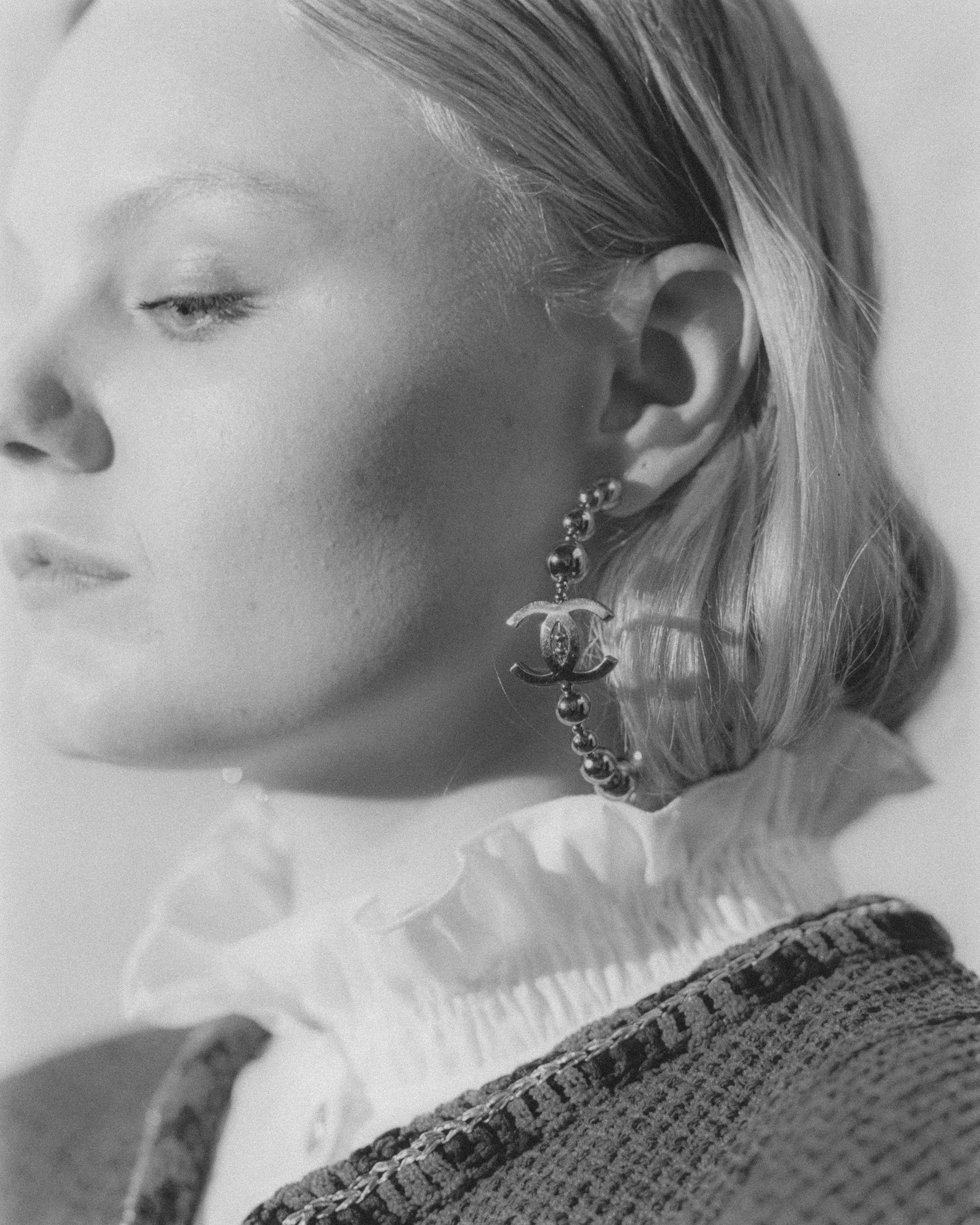
SD: What moves you besides acting?
MD: My legs move me from here to there to everywhere. I’m kidding, many things! How much time do we have?
SD: If you want, we could never stop. The answer with the legs is pretty good though. What makes you happy?
MD: This moment right now.
SD: We should have ended the interview on this note but I have to ask you, how often do you cry when watching movies?
MD: Well you know it is embarrassing for me to cry in front of people. It’s very intimate. So I cry when I watch something by myself. Last time I cried when watching David Attenborough’s new climate documentary. It’s a random thought but I do cry a lot on planes.
SD: Me too! You are the first person that ever said that to me. When watching movies on planes I always have to cry.
MD: Same here but I have no idea why.
SD: Me neither. I had quite a long period in my life where I did not cry. But on planes, the most random movies would touch me so deeply. That you have the same is crazy.
MD: I always think about why. Is it the pressure? Does it reveal a subconscious feeling of being detached from life in that moment and that everything could end any second?
SD: How do you feel when you are on planes?
MD: Depends entirely on how steady the plane flies. How much anxiety I have about crashing at any moment. Oh god — please never. Usually, I feel very good. I think it’s a beautiful thing. A surreal moment to be above the clouds and you don’t have control over anything. Now you can go online on a plane, I don’t support that at all.
SD: I think we have the same relationship to flying. For me the moment I surface above the clouds my head is completely free. It’s like the symbolism in meditation that your mind is the sky and clouds are just thoughts passing by. I am very happy and grateful when I’m on a plane. I look out of the window and think about a lot of things very intensely, I might be smiling for hours just staring at the horizon. In a time where we are constantly hearing the chatter of life, it’s beautiful to have a moment where no one can reach you and you are for yourself. It’s a spiritual encounter.
MD: Exactly, I even read very well, I’m very close to myself on a plane. Also the light, uncompromised by clouds or smog, just pure.
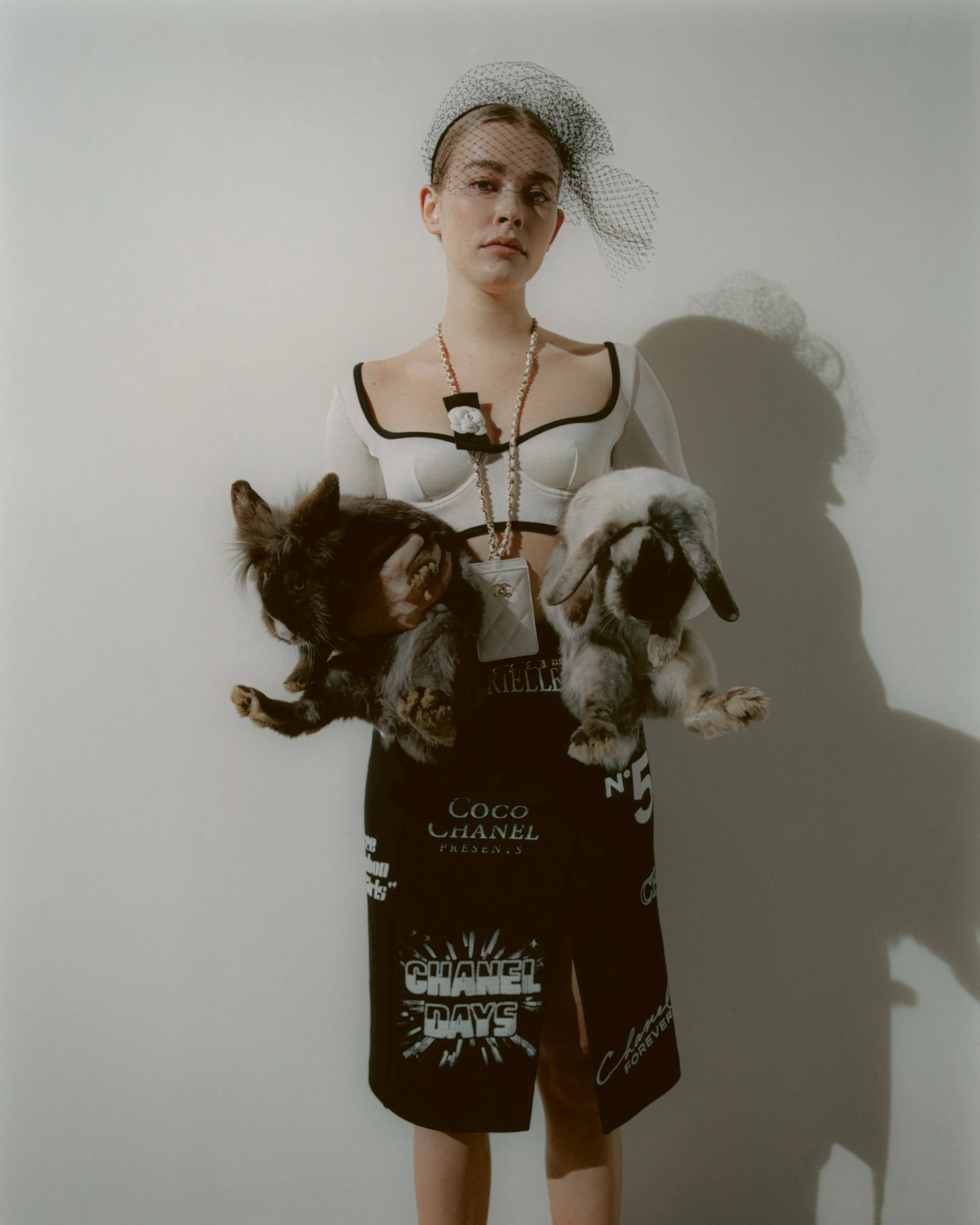
Stefan Dotter: What’s the first acting experience you can remember, Milena
Milena Tscharntke: I started very early — I was already on set by the age of eigth. When the first castings came, I remember, I felt as a child that it wasn’t a job — rather, a hobby. You don’t really think about the profession of being an actress, you know? Just after graduating I knew that nothing interested me more as a job than acting. As for my specific first experience though, I cannot really recall.
SD: Did your approach to acting change through-out the years, if you compare it to how you started?
MT: The seriousness changed immensely. I love the work especially because for a period of time you are working through the life of another person, you deal with their problems and their relationship to the world; it’s a major act of empathy. You see it during these lockdowns now, people watch more movies because for 90 minutes they want to live through the life of someone else. I love that humans look for similarities and differences.
SD: What do you want viewers to feel when they see you act?
MT: I think the beauty about it is, everyone can decide for themselves what they want to take with them. We are empathetic creatures. My biggest task is to make the act as real as possible. I don’t want someone to see me and think about how I did this and that - but to believe me one hundred percent. That’s the most important thing, making it real.
SD: As an actress you learn how to channel specific emotions. Do you think that makes actors and actresses more emotionally-driven or open?
MT: I can only talk about myself. I am very emotional and thin-skinned. I think itʼs part of our profession that we can activate emotions like this. I always feel a lot, in real life and in front of the camera. I’m always there one hundred percent emotionally. I walk through life like a sponge and take on everything that is happening around me, what people feel and say. So I think it’s the main part of being in acting, to be very sensitive.
SD: Do you take emotions you created on set into your private life?
MT: The topics you work with when you take on a part, they become present in your own life. When I played the movie Alles Easy I played a rape victim, that wholetheme was very present for me before, during and after we finished the film. A lot of women approached me and told me their stories, although I didn’t ask for them. In general though, I can go back to normal life at the end of a day, I’m not a method actress.
SD: You said that you collect a lot of things in your daily life, like a sponge — how do our current circumstances feel for you given that we are somewhat restricted in our experiences and social interactions?
MT: I actually see it from the opposite perspective — I feel like we are experiencing a lot right now and we are all forced to confront ourselves. It might not happen yet but I’m sure a lot of incredible ideas in film and art will surface as the result of this period. I’m curious as to what might develop out of this. There are a lot of things I miss right now, but I do not think we are lacking in collective experience at present.
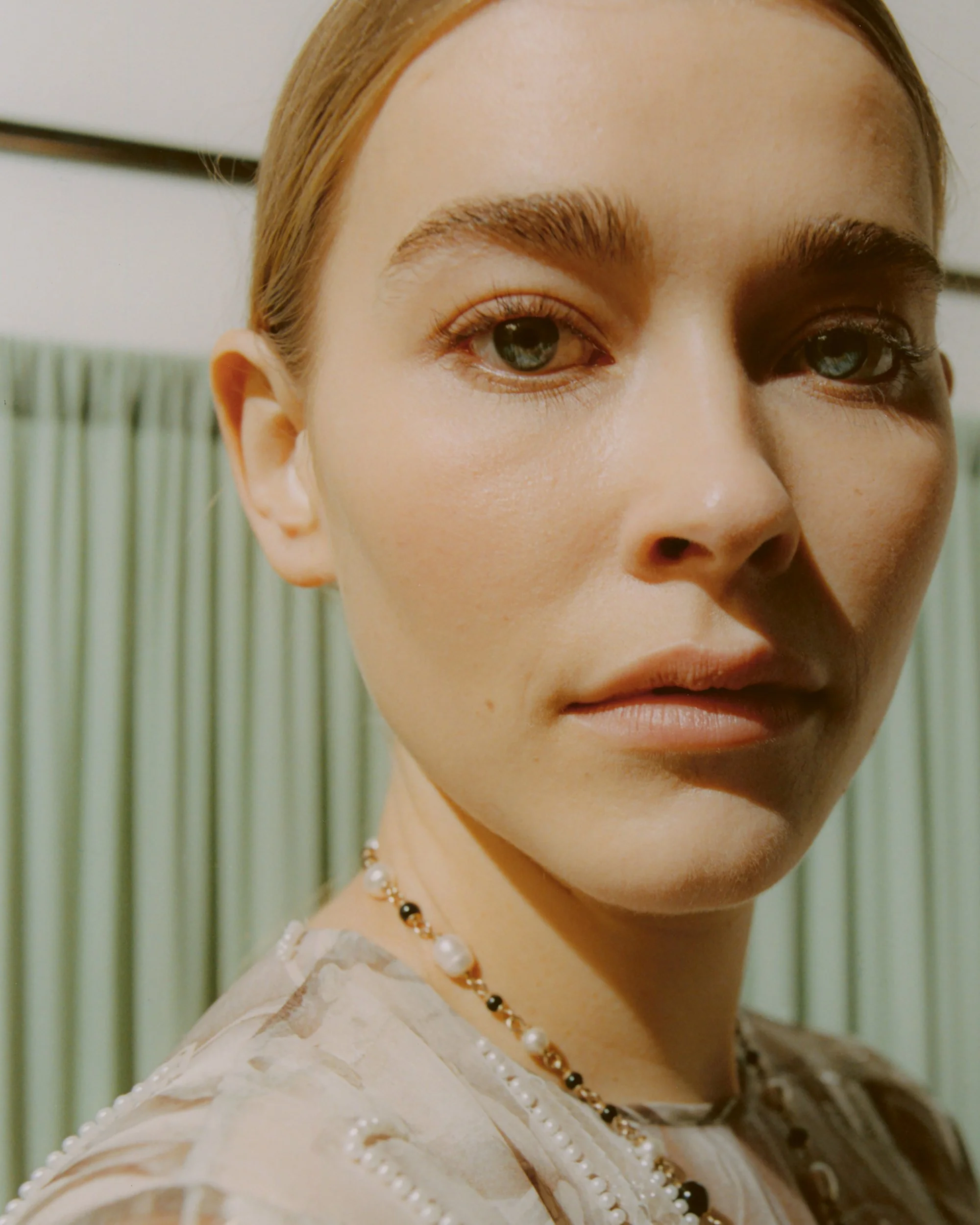
SD: When talking to friends and acquaintances lately I’ve been curious about dreams. People dream very intensely during the lockdown times, maybe because the life we usually live escapes into our dream world. What do you dream of?
MT: I process a lot in my dreams. I also know why I dream certain things. It’s a very private thing, very filmic. There is even a dream that I’ve been having since I was about thirteen years old. It’s actually a movie idea and I always hope to continue having it — I’ve experienced it about four times and it’s always continuous. It takes place in a post-apocalyptic world and a group of young people fight through a desert that is actually a city. That’s one I have written down, hoping it could become be a screenplay at some point.
SD: I think dreamscapes are an interesting thing. Even if we dream of real people end encounters, the worlds they take place in are often utopian or dystopian. That’s why I find it fascinating when people manage to build their own universes in animation or virtual reality. It might also be relevant for acting — taking part in another ~virtual~ reality. Does that possibility excite you?
MT: Yes, I think it is just another challenge. Also, in voice acting you forego visual emotions and try to project everything through your voice onto a fictive character — you give up your face and identity.
SD: What makes you happy Milena?
MT: Apart from my family and the health aspects of life, I am happy when I can work and accept new challenges to dive into. As soon as I land a new part I feel how brave and creative I become. It drives me.
SD: What drives you apart from acting?
MT: There are so many things that move me right now. Climate change is a topic that I feel very strongly about and that is present in my day to day life — trying to be as climate neutral as possible. Black Lives Matter moves me. The uncomfortable conversations about our own behaviour move me. Currently, what saddens me the most is the situation in the refugee camps on Lesbos. I feel a lot of “Weltschmerz” and it can be overwhelming. Also, what is the future of our industry? I miss the cinema so much and I cannot imagine how it will look after this crisis. I keep buying vouchers for my favourite cinemas to support them. But how will it look with smaller movies, will they even have a chance to get into the cinema? It’s an extreme situation.
SD: One more questions though, do you cry when you watch movies?
MT: I can fall really deeply into movies, I cry for beautiful and sad ones alike. Some movies I forbid myself to watch them. I haven’t seen Titanic in five years — the last time I was on the floor crying because it moved me so much. I only allow myself to watch it every ten years.
SD: What was the first movie that made you cry?
MT: It was Bambi — that was so incredibly sad. Those animated movies always dealt with existential themes of death and family. I think if we watch them again today they appear differently to us than when we were younger.


Directed by Stefan Dotter Written by Manuel Iljitsch
Styling by Almut Vogel Make-up by Susanna Jonas Hair by Wataru Suzuki
Producer Mina Hashemi Set Design by Denise Bodden
Cinematographer Moritz Matlik
Post Production by Sheriff Projects Paris
Music by
Adult Living
Production
WHITELIES STUDIO
All clothing and accessories by
CHANEL