
Werner Busch — Bonsai

The city of Düsseldorf is considered a Little Tokyo in Germany, as it is hosts the third largest Japanese community in Europe after Paris and London. In 1951, the first Japanese businessman came to Düsseldorf; that became 3 in 1952, and in 1955 a Mitsubishi-related business registered as the first Japanese company. As other Japanese corporations trickled into Düsseldorf, it eventually came to be known as “The work desk of the Ruhr district”. Its migrant community has been growing ever since and Düsseldorf has naturally become the number one place in Germany for people interested in Japan.
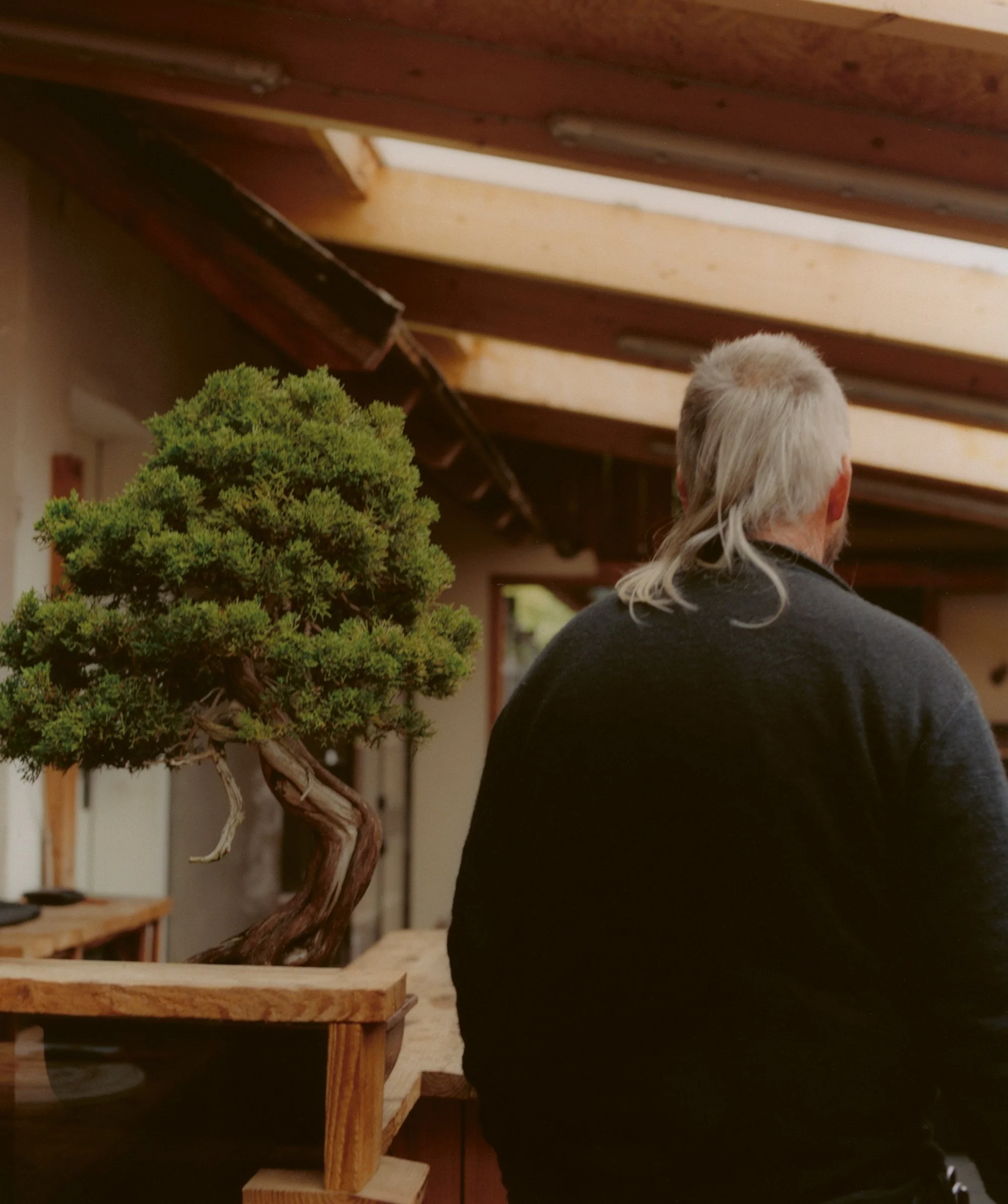
It’s only natural that we found the Bonsai Museum tucked away in the outskirts of the city, seamlessly embedded in a quiet suburban area. We meet Werner Busch, a renowned Bonsai teacher and founder of the International Bonsai School of Düsseldorf. We stride through gravel paths through an assortment of approximately a thousand trees as he tells us about his history, discovering the great within the small and how a bonsai is the perfect partner for an organic, artistic conversation.
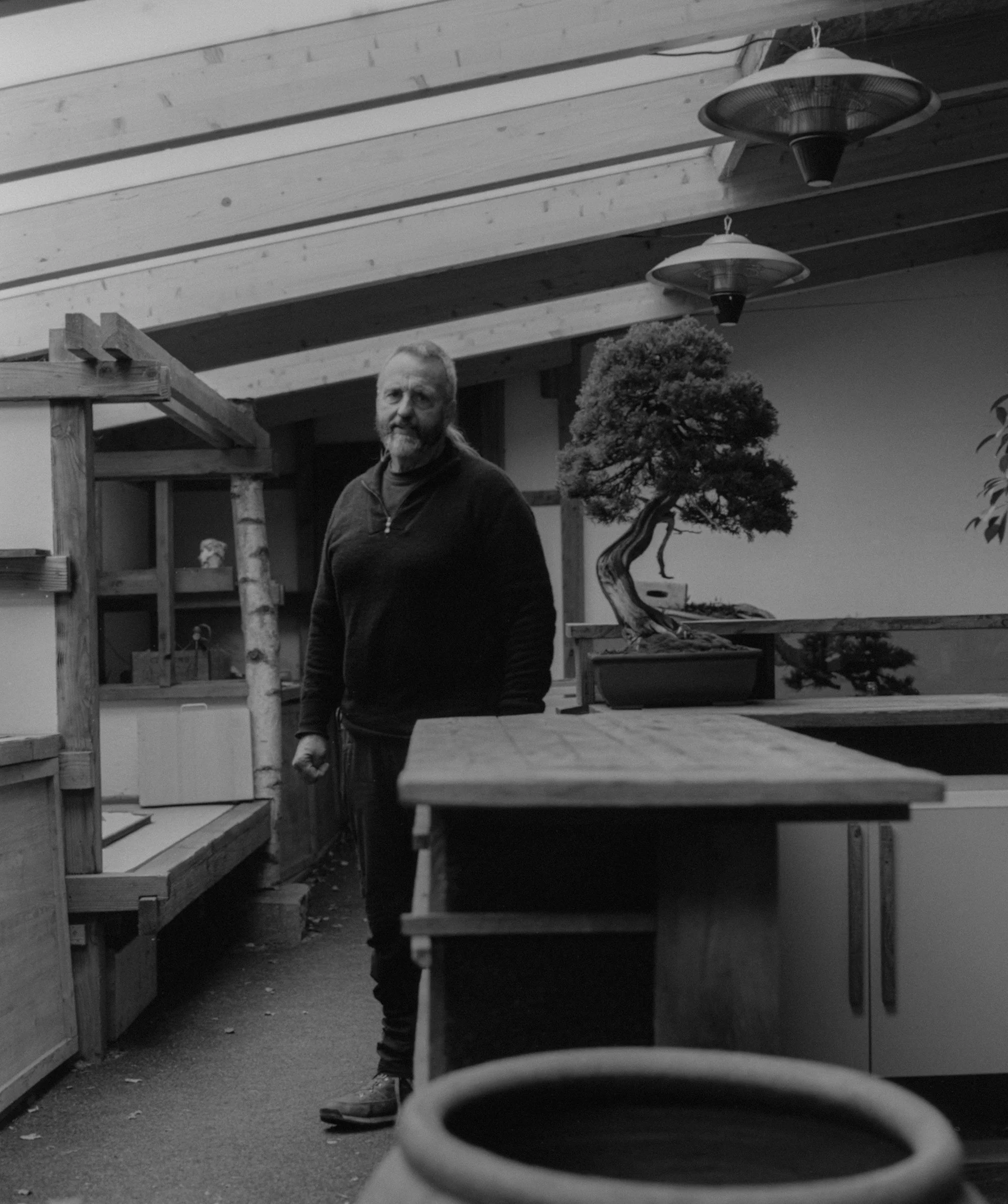

Werner Busch: Here we enter the museum (he points to an archway). This is the place where we explain to our visitors all they need to know about Bonsai. We place them in a certain way to give them as much space as they need so you can observe them with a calm eye. Right now we are fading into autumn, so the colour palette of leaves is very special.
Stefan Dotter: How many people are currently part of your team?
WB: Around 6, although full time we are 3.
SD: What’s your oldest tree?
WB: I have no idea (laughs). I have to guess, not knowing how old every tree is. This one over here (he points to an olive tree) could be around 150 years old. Most of our trees are between 50 and 60 years old. In terms of design they vary a lot, however, you will find something for every taste here.
SD: Bonsai started to spark my interest last year and after obviously researching a lot I got my first little Bonsai and the initial desire made me buy more. But I quickly noticed that my amount of travel makes it difficult to dedicate myself enough.
WB: You might have to start that in a different stage of your life.
SD: How long has your atelier and the museum been around and how did you get to Bonsai?
WB: We have been around for 37 years. When I was approximately your age I started to read a lot about it. I was a biology student actually — but there were not good jobs at the time when I got my degree. That’s why I switched and fortunately, I had this piece of land to try it out. That was in 1984.
SD: Do you have a general interest in Japanese culture?
WB: Yes, of course. I visited Japan many times, even back then. I met a lot of Bonsai enthusiasts over there and explored this world in all its originality. Some of the Bonsai masters I met come to Düsseldorf occasionally to give classes.
SD: So there is a school here as well?
WB: Yes, it is integrated in our little microcosmos here. We have 8 classes with 10 students each. The courses are 3 times a year, but only on the weekends. Normally, I am teaching by myself, but for our graduate classes someone comes over from Japan to put down the official stamp.
SD: Did you have a master that has been important throughout your career?
WB: Yes, I have worked with many of them. In our guest book you can see all the people who have visited. Mostly, I studied here but many things I taught myself and adjusted accordingly when I saw a Bonsai master at work.
SD: Bonsai is an interesting topic, most people know it, but they don’t know anything about it. I speak to people, who studied biology, and they think that those are the trees for the inside. A minefield of mis-informations.
WB: Yes, it also has a lot to do with the people who imported them. Most people buy plants for decorative purposes. This is why they buy indoor Bonsai for their apartments. Not a lot of them even survive on the inside. Those are the tropical ones, so they appreciate that it is always warm inside — but the humidity is different. And then they get parasites and the fun is over. The Fukien tea tree is a good example — it never shows when it is not feeling well and one day it suddenly dies. Usually because of overwatering. Watering is the hardest part of keeping a Bonsai.
SD: It still is a field where some knowledge is necessary. I am a classic autodidact and when I ventured into Bonsai I was sure I could handle it by myself but there were just too many possible mistakes to be made. I went crazy in the process of trying to grow moss.
WB: Exactly, this is where my biology background came in handy. You have to know what a tree can deal with. In Japan, when you have visitors, you take the tree inside for a day or two. Ideally during a time when it is not growing. What grows in apartments is not used to sun and vice versa. Traditionally, the Bonsai stays in the nursery until an important gathering, then they take it home for a day. But even that is fading away — the Japanese have even less time for these things than us. Young men have to work and make money all the time and are never home, so they are not able to take care of a family tree and may give it to a nursery.
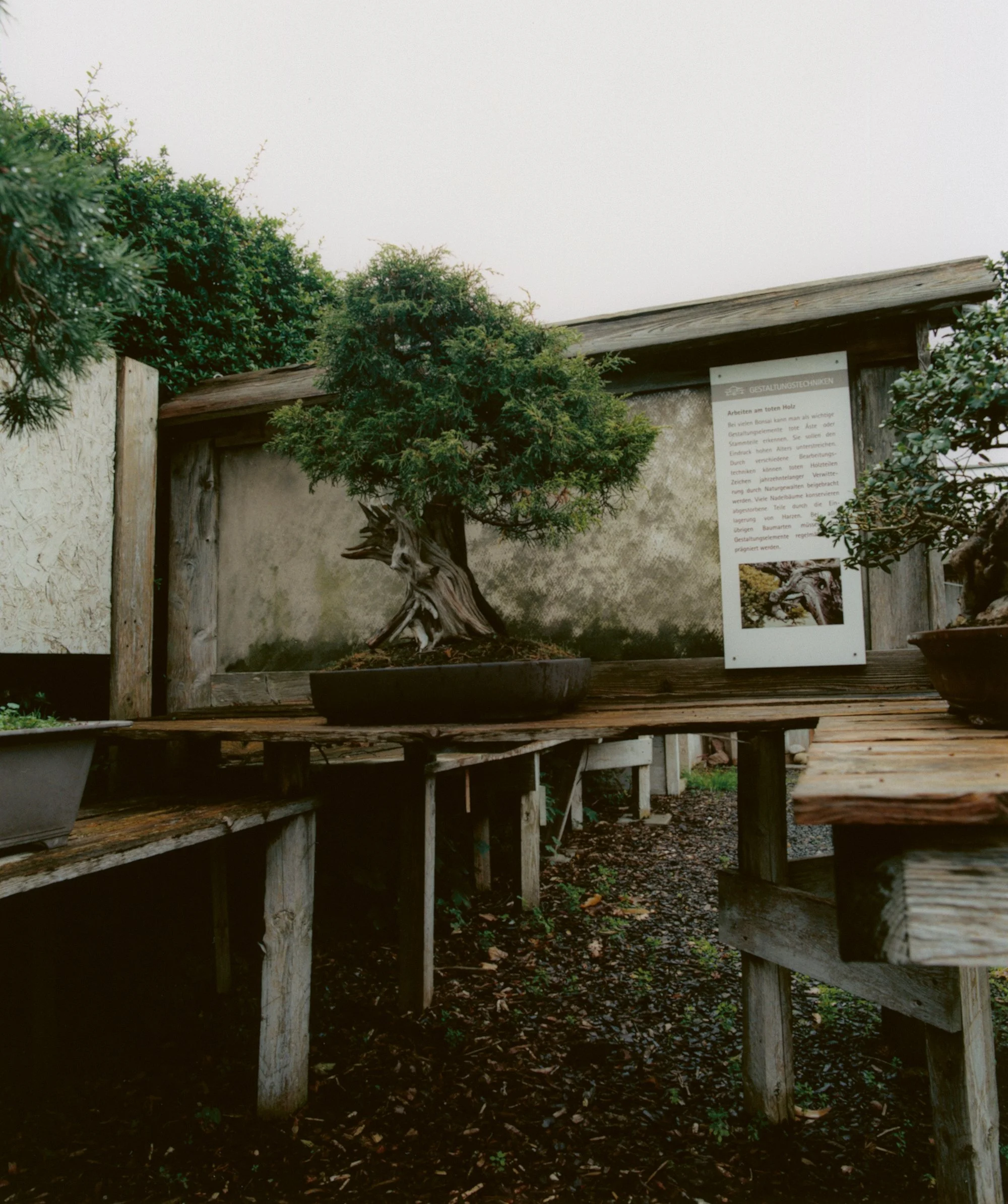
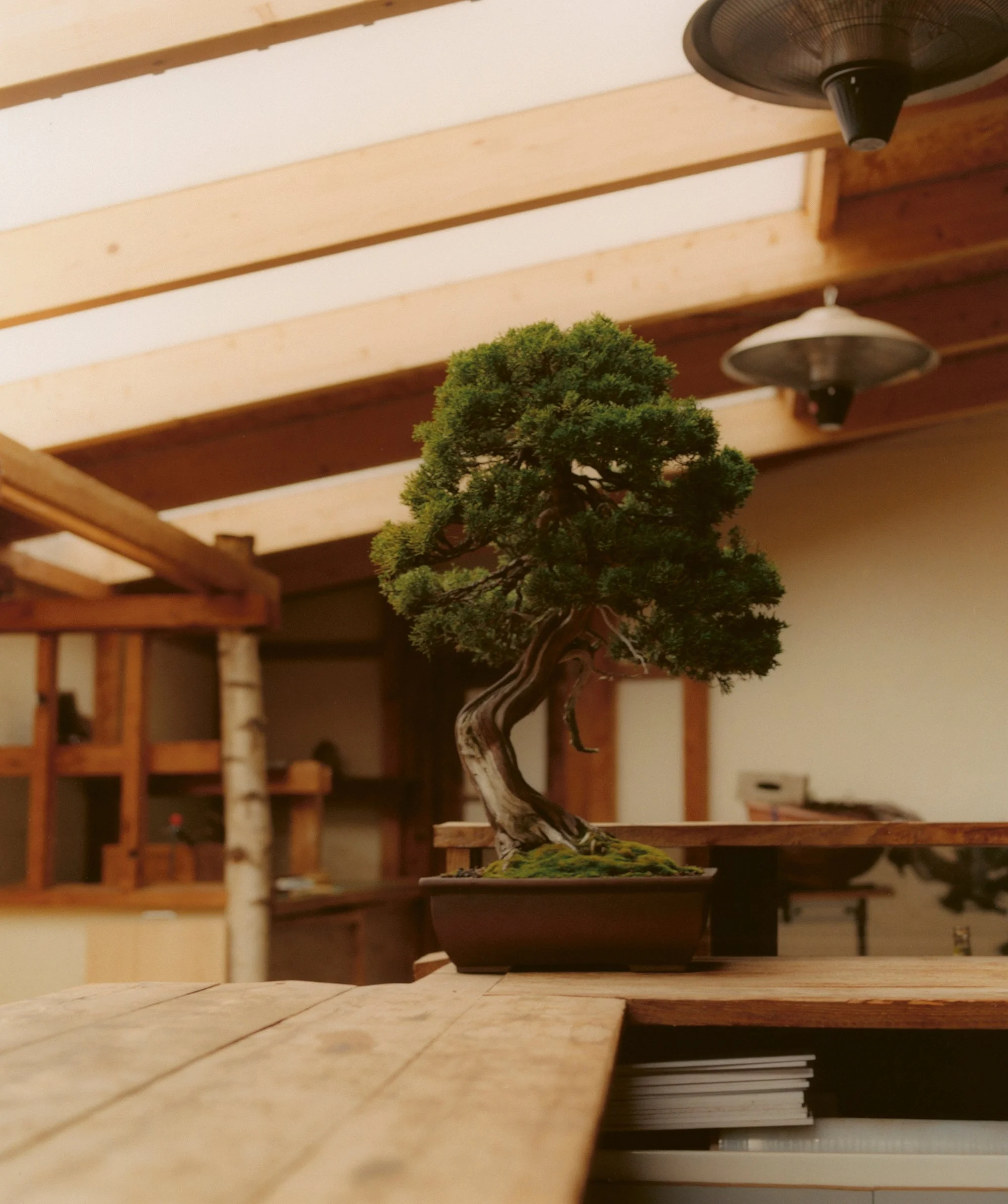
SD: And sometimes those family-trees are very old. The last time I visited a nursery in Tokyo, the master told me that one of her trees was 450 years old and she is the 8th generation working on it. I find the thought intriguing that it is an artwork that is never finished. It’s the perfect teacher for patience.
WB: That’s exactly right. Also, when you take over an old tree, the generations that worked on it before you already have their ideas woven into it. It’s similar to the situation when you buy a painting and its colours are moving around and changing all the time — and you have to restore it with new paint. The question is whether you are just going to administer the status quo or will you be putting your own stamp onto the tree? It’s a general problem with things that are passed on through generations. Here the first generation of Bonsai owners is slowly passing so the first trees are being inherited. Now we have to remind the descendants that the idea of the form of the Bonsai was one their father or grandfather had. As a Bonsai owner you have to think ahead, who will take care of your trees after your time is over. It’s all about patience. The tree brings its own tempo into your life. It is absolutely relaxed. Until it does what you want, a lot of time passes.
But time passes anyway. If I think about it, my 37 years in the world of Bonsai passed quite quickly. From the moment you have an idea about a tree until the moment that idea took form, a lot of time passes. In your head the tree is always progressing more quickly than in reality. You can’t be impatient however. You always have to look out for the reaction of the tree. It is reacting to everything you do. When you cut something, it grows somewhere else. If you bend it after wiring, it will tell you if it likes it or not. You realise these ideas together with the tree.
SD: A creative conversation with a tree — you pass an idea onto him and it answers you with its own ideas. And this conversation is repeated over and over again. Do you also practice other Japanese forms of art here?
WB: Yes. Bonsais are often displayed with Suiseki stones. Classically they are displayed in a Tokonoma. Those stones are observed on the quest to find the great within the small. Very common are the ‘landscape stones’. They are found as they are and you may see an entire mountain range in them. You put them on a wooden socket and elevate their appearance. You can observe in these stones whatever you want — you can discover the world through those stones. Most of the stones here are from Willi Benz, who wrote a book about it as well. He used to live in Mannheim but he has already passed. “Kiesel-Willi” is what we called him. A stone collector renowned Europe-wide.
SD: I feel like a lot of people get into Bonsai and do it for a while. But if you actually want to do it semi-properly you have to dedicate your life to it.
WB: I say if you made the tree survive for a year, then it belongs to you. Then you know the tree.
SD: We are in Düsseldorf now, which hosts the third largest Japanese population in Europe. Do you take care of any Bonsais for Japanese families from here?
WB: Actually no, for a multitude of reasons. Most of the Japanese community only reside here quite short-term. If they would have trees they can’t bring them back to Japan.
SD: I saw a lot of Bonsai in Japan. Yours feel unique and different to those ones. They rarely look like an actual tree, rather more designed.
WB: A lot of the trees you will find in Japan are older and more impressive. We do have some Japanese trees, most of the ones that are older than 50 years. Traditionally, what makes a tree special is elevated in an abstract way. The tree trunk for example is much stronger. That’s how it often is in Asian cultures. Even in livestock breeding — I remember there is one chicken that is pretty small, but the hair and the tail is enormous. Like a cartoon.

SD: Do you ever shape a tree in front of an audience?
WB: My son sometimes does it. This is a new thing that has established itself in the West. I think it is because the Americans brought Bonsai back home after the war. It took off faster in the US than in Europe. I think the performance aspect of it attracts young people who want a bit more action and exposure — but it has nothing to do with the basic approach of developing something over a longer period of time. It’s an aspect that makes Bonsai live on now because we can entertain people with it.
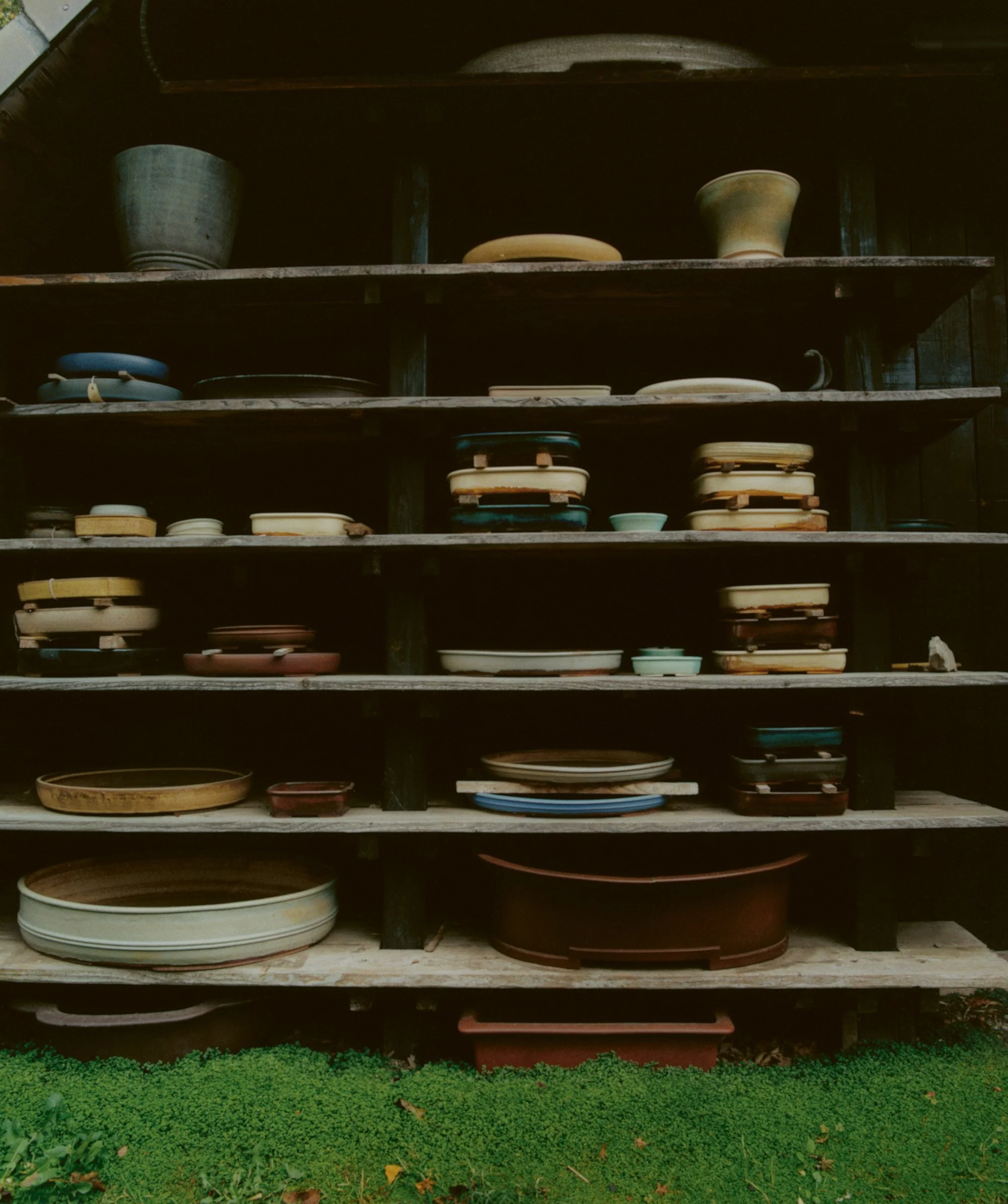
SD: We talked so much about the tree, but “Bonsai” basically means tree in a pot. So the pots are incredibly important and an own form of art.
WB: Yes, exactly. Some people working in ceramics specialised in Bonsai pots — it’s also more lucrative.
SD: What’s your most expensive tree?
WB: We do have one in the museum which is worth around 12.000€. A lot of people don’t want to invest in a Bonsai because it’s lifespan is theoretically limited. I always tell them, don’t think that 10.000€ are gone when the tree dies, those 10.000€ are gone as soon as you buy the tree. Bonsai are unique things. But you need to be dedicated to it. I always have to see who the person is who wants to buy the tree. If it’s someone who just wants a nice decoration it’s a pity if the tree dies after a year.
SD: What about watering systems for people who travel a lot?
WB: It can work, of course. But ideally you would water by hand because you have to track the things that are happening to the tree, the new things that are growing. If you water with a system you don’t have enough contact with the tree.
SD: It’s about the relationship with the tree.
WB: Having a Bonsai is like having a living pet, and this is how you need to treat him.
Photographs & Interview by
Stefan Dotter
Production
WHITELIES STUDIO